
This Classical Pianist Has Reached the Mountaintop. No, Really.

image


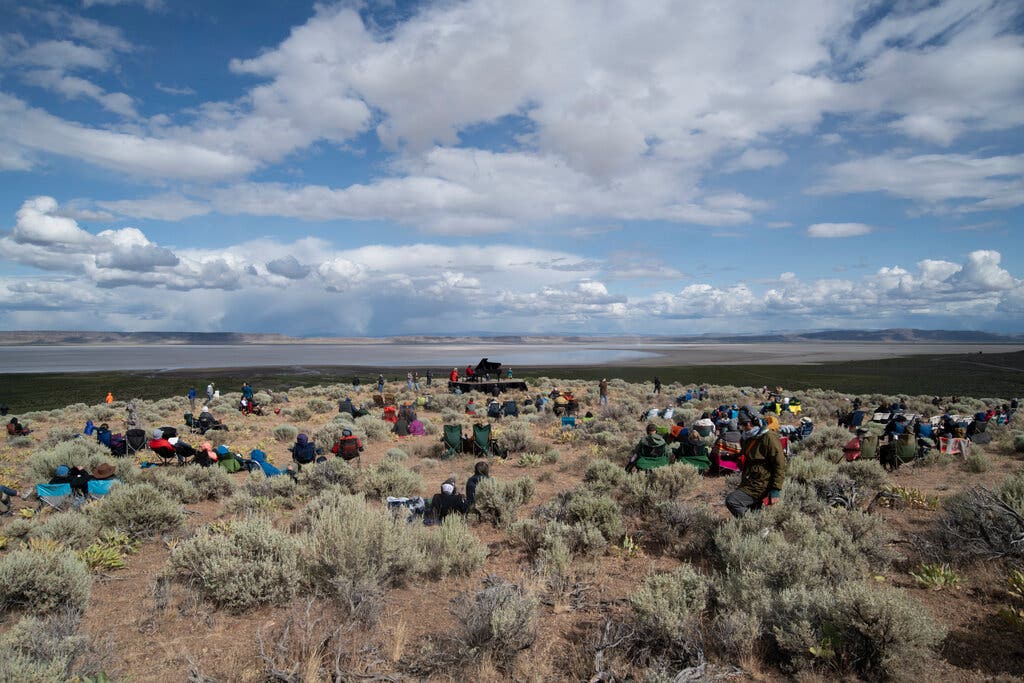
For the last decade, the classical pianist Hunter Noack has been embarking on an unusual journey: He hauls a thousand-pound 1912 Steinway concert grand piano to places in the outdoors not known for hosting concerts.

Picture a man seated at a piano beside a lake. It could also be on a mountaintop, in a forest or meadow.

This summer, Noack, 36, is in the midst of a 10th-anniversary tour of his “In A Landscape” project, which has taken him to Jack London State Historic Park in Glen Ellen, Calif.; Black Butte Ranch in Sisters, Ore.; and Warm Springs Preserve in Ketchum, Idaho.

“I get excited at the idea of bringing a piano where no piano has gone before,” Noack said.

Hunter Noack, wearing a western-style shirt, jeans, a cowboy’s belt and boots, leans on a covered piano set on an outdoor stage.
As a student, Hunter Noack was interested in the work of classmates who produced their own shows. He is now doing so with his piano.Credit...Alex Hecht for The New York Times

Inspired by the preservationist John Muir, Noack started the project as a way of getting closer to nature, and bringing classical music to rural areas where it is not typically accessible. The idea, Noack said, is to remove the barriers that typically limit classical music to concert venues like Carnegie Hall.

“What John Muir was trying to articulate is that we don’t just need the wild to recreate in,” Noack said in an interview. “We need the wild to be human, and to be more compassionate, and to be more empathetic. And that’s the medicine that I needed. To be outside.”

The roots of the project can be traced back to 2015. Noack, a native of Sunriver, Ore., had just moved to Portland, a couple of years after graduating from the Guildhall School of Music in London. He was working odd jobs and struggling with student debt. He considered joining the National Guard, but instead applied for a small grant from a regional arts and culture council in Portland to try an experiment.

Noack had long been fascinated by immersive theater. As a student at the University of Southern California, Noack said he had been “enamored” with classmates who independently produced their own shows, which included plays by Anton Chekhov staged in abandoned warehouses, and a Sam Shepard piece performed in a rundown hotel in downtown Los Angeles.

“I wanted more of this in my life,” Noack said. He found the shows “scrappy and fun and daring.”

A woman lies on her back on the stage as Hunter Noack, wearing a long-sleeve red shirt and headphones, plays his piano by a mountainside.
A team helps Hunter Noack and his piano travel to scenic locations.Credit...Alex Hecht for The New York Times

After graduating from college, Noack, along with a friend from boarding school, created an immersive play in San Francisco. In London, Noack eagerly took in shows by the experimental theater company Punchdrunk.

“These theater and opera companies were really pushing the boundaries, and that’s what I wanted to do with my art: classical piano,” Noack said.

A traveling group of six helps Noack bring his piano to the various remote locations. The team has developed a system for moving the nine-foot instrument. The piano sits on a custom-designed 16-foot flatbed trailer, and can go anywhere that a four-wheel-drive vehicle can. Once they have arrived at a destination, the trailer turns into the stage.

A grand piano, placed on a stage, is silhouetted against a bright blue sky and sweeping clouds.
Hunter Noack’s piano tour has grown to more than 50 dates a year.Credit...Alex Hecht for The New York Times

The first year, Noack rented a piano from a local dealer. But when he said he wanted to bring the rented piano to Mount Bachelor, in Bend, Ore., and the Alvord Desert, in the southeastern part of the state, the dealer did not want to take on the insurance liability.

Afterward, in 2017, a philanthropist purchased and donated the piano that Noack uses today.

Noack didn’t intend for “In A Landscape” to be a full-time job, but the initial audience response was so large that he kept going. The original run of the tour had nine dates, but it has since expanded to more than 50 dates a year, over a wider area.

The concerts are held rain or shine, hot or cold. (The temperature during concerts has ranged from subfreezing to above 100 degrees.)

Among the notable locales where Noack has played are the entrance to Yellowstone (via the Roosevelt Arch in Montana), Joshua Tree National Park in California, Crater Lake in southern Oregon and Banff National Park in Canada. Most of the venues are in national parks in the Pacific Northwest, but Noack said that the most meaningful concerts haven’t necessarily been at the most recognizable locations, but rather at smaller, more intimate spots like ranches and farms.

“It’s really all about the people that are there and the relationship that they have with that space and what the landscape is doing for us in that for those 90 minutes,” Noack said.

Noack’s shows have even appeared to attract wildlife. He recalled that at a two-night run near the Oregon coast, the piano was located near a cliff. A whale swam up to shore for both performances and lingered for their entirety.

“I like to think that the whale was enjoying this show,” Noack said.

Among other wildlife that made appearances were free-range horses, birds and deer.

Noack’s ambition to bring a piano to unfamiliar territory is expansive.

He said he wants to perform at, among other striking sites, remote villages in Canada; at the Preikestolen, a steep cliff in Norway; during a safari in Africa; atop Vinicunca, the rainbow mountain in the Andes of Peru; and by the salt flats of Bolivia.

“My hope is that I can use this project, my love of the music and my curiosity about how public lands and natural resources are managed, to explore the world and learn,” Noack said.
COMMENTS

Leave a comment

Everywhere At Once Adds Fatboy Slim, Lucy Spraggan, Gene, D Double E, And More To Massive Festival Bill

image

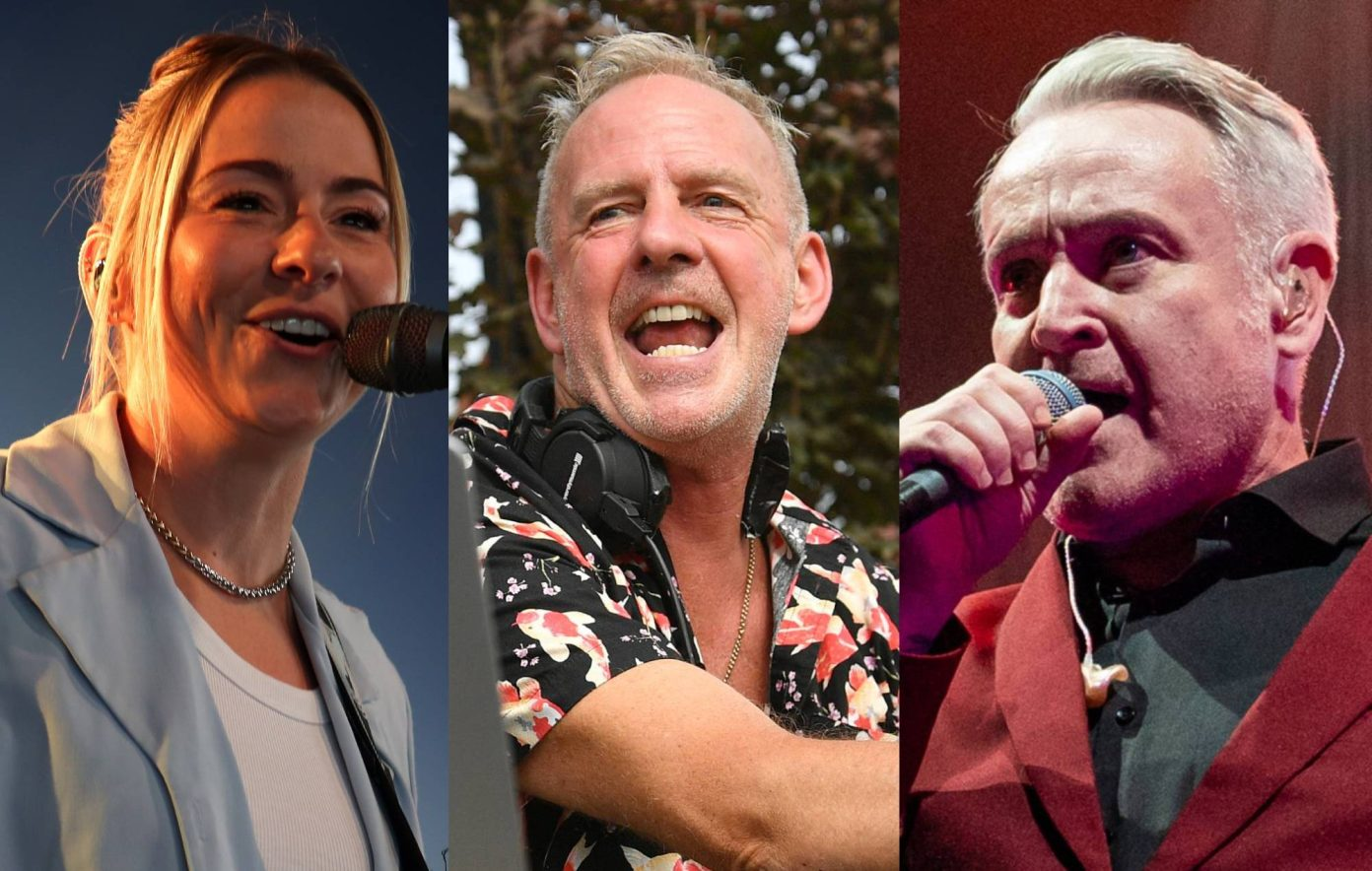
Fatboy Slim, Lucy Spraggan, Gene, D Double E and Westside Cowboy are among the latest artists added to the line up for Everywhere At Once, the new nationwide festival being described as a “Glastonbury replacement” during the festival’s fallow year.

The event is being organised by Music Venue Trust in partnership with The National Lottery and is scheduled to take place from June 26 to June 28. The dates coincide with what would normally have been Glastonbury weekend before the festival announced a break for 2026.

Rather than taking place at a single site, Everywhere At Once will spread across hundreds of grassroots music venues throughout the UK.

Across the three day event, venues from Inverness to Penzance will host performances from both major artists and rising acts. The goal of the festival is to reconnect fans with local independent venues while encouraging community support and music discovery.

Becky Hill, Tinie Tempah, The Lathums, Rizzle Kicks, The Divine Comedy and Master Peace had already been confirmed for the event. Now, Music Venue Trust has revealed another wave of performers joining the line up.

Fatboy Slim, Glenn Tilbrook, Lucy Spraggan, Gene, D Double E, P Money and Westside Cowboy are among the newest additions. Tilbrook is set to appear at Theatreship in Canary Wharf, East London, while Spraggan will perform at The Sub Rooms in Stroud.

Gene will also play shows in Southampton, Newport and Lancaster. D Double E is heading to The Brickworks in Nottingham, P Money will perform at Suki10c in Birmingham, and Westside Cowboy are scheduled for a hometown performance at Manchester’s Low Four.

The Lathums have additionally confirmed another date at Preston venue The Ferret after their two previously announced shows sold out within minutes.

Details surrounding Fatboy Slim’s appearance and ticket information are expected to be announced closer to the festival weekend.

Everywhere At Once line-up. CREDIT: PRESS

Speaking about the initiative, Fatboy Slim reflected on the importance of small venues in shaping artists and music culture.

“I’ve been lucky enough to play huge stages all over the world, but grassroots venues are where it all started for me and where music scenes really begin, where artists learn their craft, where communities form, and where people come together purely for the love of it. Without grassroots venues, independent promoters and local crowds taking a chance on something new, none of this exists,” he said.

“These spaces are vital for culture and for local communities, so if there’s anything I can do to help shine a light on them and help keep that spirit alive, I’m more than happy to be involved. And if you care about music, go out and support your local venues, buy a ticket, discover somebody new, and be part of keeping those scenes alive.”

Glenn Tilbrook also shared his thoughts on the value of grassroots venues, reflecting on how important they were during the early years of Squeeze.

“50 years ago Squeeze started out in the small venues of South East London. Later this year we will be playing our biggest UK tour, including at the O2 Arena across the Thames from the Theatreship. I still go out and play solo shows at grassroots venues and some of the best nights I’ve ever had playing music have been in tiny rooms packed with people who just love live music,” he explained.

“These venues don’t just support musicians, they become part of the fabric of local communities,” he added. “They give people a place to meet, connect and discover something new. We need to cherish them, if we lose them, we lose far more than somewhere to see a band. So show your support for your local venue, you never know where the next great artist, or the next great night, might come from.”


Lucy Spraggan also spoke about the wider impact grassroots venues have on the music industry, calling live music an “ecosystem”.

“Each night a venue supplies a stage for an artist, that artist is supported by their crew, just as the venue is supported by their staff. You can see the network of livelihoods that entwine through the umbrella that is ‘live music’, it’s pretty endless,” she said.

“There is a career for musicians, crew, artists, tour managers from smaller projects all the way to Taylor Swift sized projects, but only if we have the venues to support them,” she continued. “Grassroots venues give opportunities to a plethora of people and we, as artists and gig goers, breathe life back into the venues. We are all an important part of the ecosystem.”

The festival is being led by Music Venue Trust, Save Our Scene and the Association of Independent Promoters, while The National Lottery continues its support for the grassroots music sector. Their partnership first began in 2021 to help revive live music following the pandemic shutdowns.

During the three day event, fans will also have opportunities to support charities including War Child, Nordoff and Robbins, Help Musicians UK and Teenage Cancer Trust.

The launch of Everywhere At Once comes during a difficult period for the UK live music industry. Recent reports revealed that 30 grassroots venues permanently closed between July 2024 and July 2025, while more than half of the remaining venues operated without profit last year and over 6,000 jobs disappeared from the sector.


To help support smaller venues and developing artists, industry leaders have continued pushing for a ticket levy system. Under the proposal, a portion of ticket sales from arena and stadium shows would go toward helping grassroots venues survive and supporting touring artists.

The industry has until June 2026 to ensure that at least 50 per cent of major live events voluntarily contribute to the levy before the UK government considers making it mandatory through legislation. Live Nation has faced criticism for not moving as aggressively as some other companies.

Live Nation, which previously supported Harry Styles donating £1 from every ticket sold for his upcoming Wembley Stadium residency to the LIVE Trust, responded by saying it “supports artists’ choices on charitable donations, and has worked with numerous artists who have contributed to the voluntary levy, from Coldplay to Biffy Clyro, and will continue to do so.”

The levy proposal has often been compared to the financial structure used in Premier League football and received backing from the UK government in 2024.

Earlier this year, grassroots venues also received some relief after the government reversed a planned increase in business rates and introduced additional support measures for pubs and live music venues.

COMMENTS

Leave a comment