
Exclusive Interview with Phaze

image
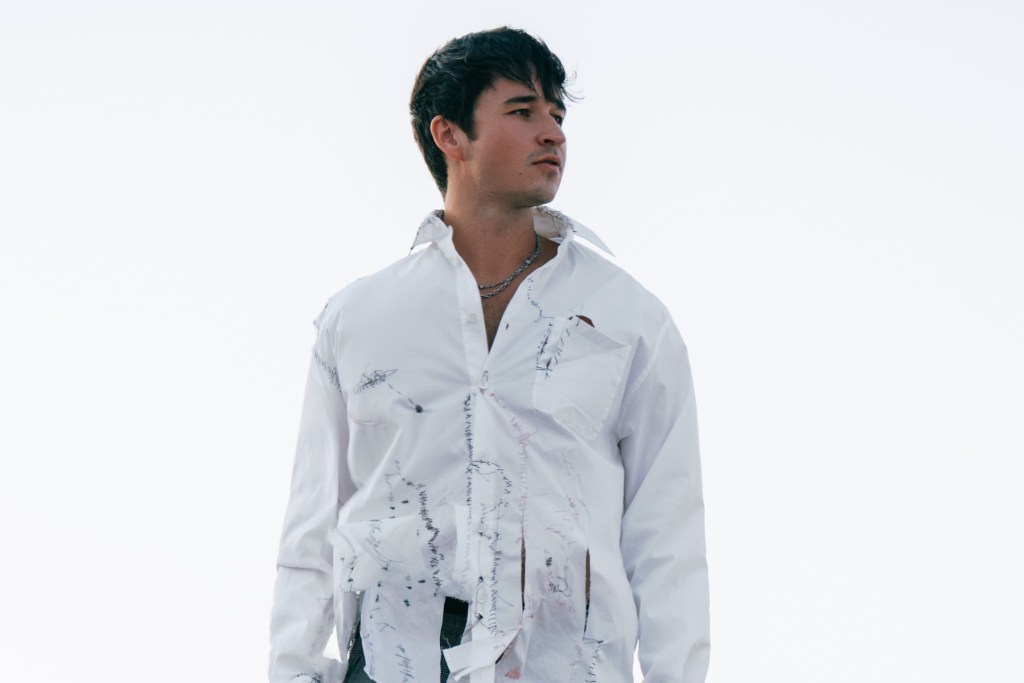
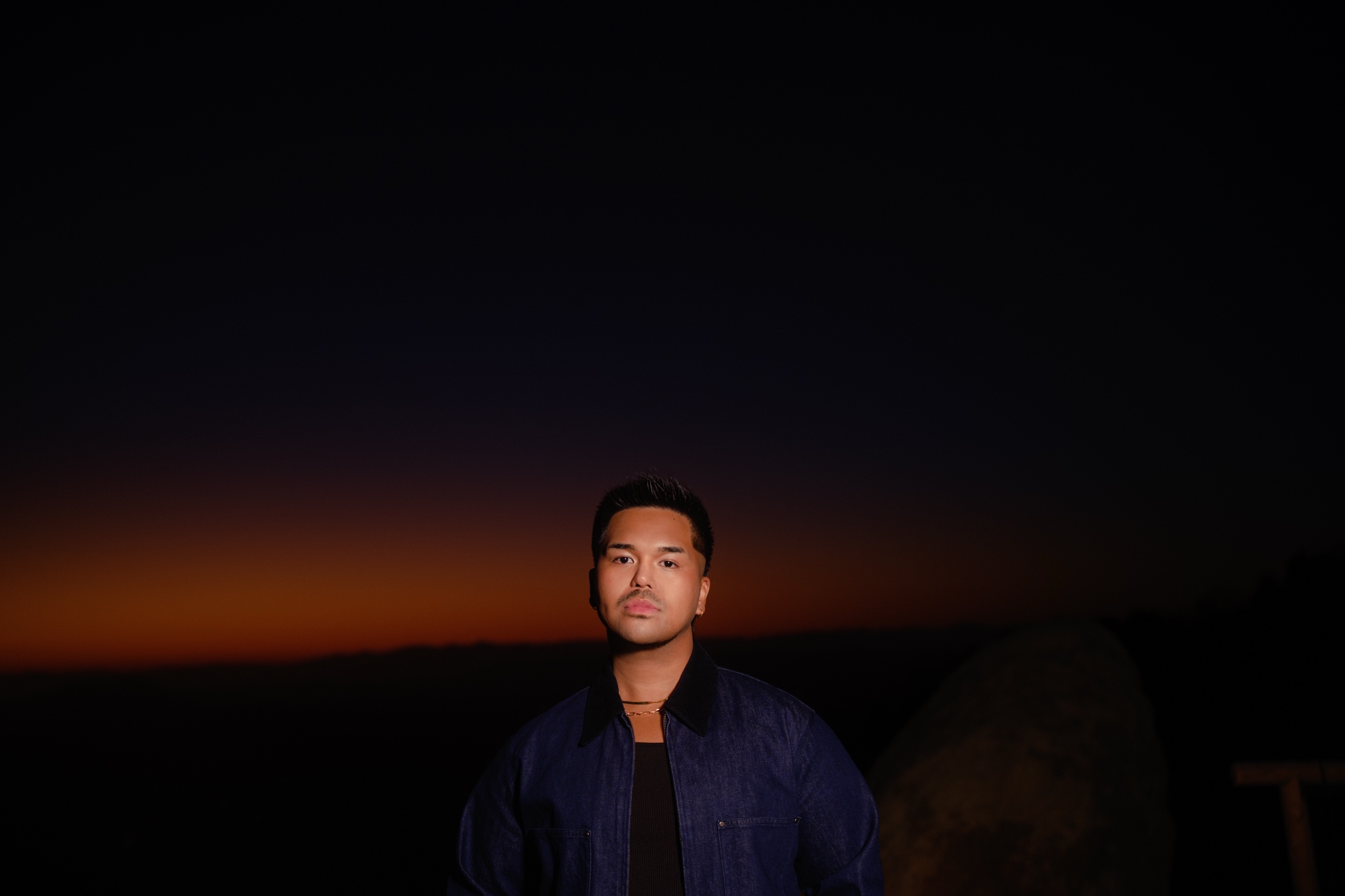
Artist Spotlight: Phaze
 
With a cadence that is at once conversational and commanding, Phaze rides the beat in tight pockets, building momentum through bursts of intensity that amplify the song’s raw urgency.

“We caught up with Phaze to explore the moments that defined their sound — and the vision that drives their next chapter.”

PapersPlanes: What inspired your single "Vengo De Nada", and what story are you trying to tell through it?
 
Phaze: The song was literally made in about 20-30 minutes. My engineer and I (Choko Beats) were talking about doing a feature with David Rolas and it started off that David was taking initiative on the song but he had to go drop his cousin off at his house, so in that meantime Choko played another 4 bar drum pattern and I told him let’s roll with that one instead. Choko got on the keys and I got on the mic and sang the melody and Choko worked around the whole song and when David came back he stood in awe and asked me “I know this is your song but could I jump on it?” And I said “hell yeah bro that was the whole plan” and the rest is history.
 
PapersPlanes: How has your music evolved since you first started out?

Phaze:I remember starting off I couldn’t even write one bar hahaha and right now that you asked me this and reflect and “Damn I’ve come a long way” and this is just the beginning I have a lot more music in the vault that I’m going to love to share to the world when the time is right. Timing is everything.
 
PapersPlanes: Can you share a behind-the-scenes moment from your recording process?

Phaze:I had a studio session with KXNG Crooked aka (Crooked I) and I was nervous knowing that I was about to work with an artist that has worked with Eminem and I kept thinking to myself “what if he don’t f**k with it?” But since it was my song I went in the booth first layed down my verse and harmonized a hook and I wasn’t sure about it but Crook told me to roll with it and I did and I remember stepping out of the booth and KXNG Crooked rapping the cadence to my lyrics it was a great feeling seeing that he actually liked what I did and then he went in there and just off the top in like 5 minutes he was done with the verse and it came out crazy dope. The song is called “Perico” which in Spanish that’s a word for cocaine but I named it like that because of how powerful the song was going to be. It’s available on all streaming platforms for anyone that wants to listen. But yea that was crazy behind the scene moment with one of the best lyricist in the world. Shout out KXNG Crooked ??
 
PapersPlanes: How do you stay motivated and creative during times of writer’s block?

Phaze:I honestly completely disconnect with the music and get on my networking game for weeks or even months or not even do anything related to music at all just live life until I feel motivated by any experience I live that I need to make a song out of, get into my creative zone and start making music again.
 
PapersPlanes: What role does your personal life play in shaping your music?

Phaze: Everything. If I never lived it I won’t write or create music about something that I’ve never experienced. I kept it 100 in everything I do.
 
PapersPlanes: How do you approach collaborations with other artists?

Phaze: I’m open to it as long as the other artist is dope, And if I do a collaboration I make sure the artist(s) of the song were working on are also present at the moment of creating. It’s just a magical moment caught on the microphone when done like that.
 
PapersPlanes: What has been the biggest challenge you’ve faced in your career, and how did you overcome it?
 
Phaze: Addiction. I was addicted to fentanyl and died 3 times and by the grace of God im still here. I had to be away from that drug for like 5 months at a rehab in TJ to finally feel ok but it’s so addicting that it’s just on your mind constantly and even in your dreams. After I got out of rehab I relapsed, died 3 times in 3 days and that was the final straw for me. I had to get off it or I was going to die. I chose to LIVE rather than DIE and give thanks to God everyday for helping me get out of the hell I was in. God works in mysterious ways and every single time I OD’d the medicine was available and the quantity to come back to life from a Fentanyl overdose. It’s the worst feeling in the world coming back to life, but like my new album IF IT WERENT FOR GOD I would not be here today.
 
PapersPlanes: How do you connect with your fans and build your community?

Phaze: On social media mainly and email list. I know what it’s like to be an artist and it’s not the easiest thing to do so I try to help anyone and everyone as long as they’re as serious as I am.
 
PapersPlanes: Are there any new genres or styles you’re interested in exploring?

Phaze:Of Course. It’s limitless for me in open to work on any genre or style I know I would need the practice but will only make me better than what I already am.
 
PapersPlanes: What legacy do you hope to leave in the music world?

Phaze: Phaze’s (David Josue Arauz) Purple Pyramid’s (Record Label) legacy. I want to change music and bring it back to what it was, when you would hear a song and it would give you goosebumps.
 

COMMENTS

Leave a comment

Producer Gordon Raphael reflects on 25 years of The Strokes’ ‘Is This It’

image

Twenty five years after The Strokes released their landmark debut ‘Is This It’, producer Gordon Raphael has reflected with NME on its lasting influence, the journey the band have taken since and the renewed excitement surrounding guitar music today.

‘Is This It’ initially arrived in Australia on July 30, 2001. Its release expanded to the UK, Europe and Japan one month later, while American listeners had to wait until October following delays caused by the 9/11 attacks.

In its perfect 10/10 review, NME described ‘Is This It’ as “one of the best and most characterful debut albums of the last 20 years”. The celebrated first record from Julian Casablancas and his bandmates featured ‘Hard to Explain’, ‘Last Nite’ and ‘Someday’. It helped ignite an international garage rock revival after Britpop, grunge and nu metal had faded. The effortless style of the New York group, combined with the album’s memorable guitar patterns and defining lyrics, shaped indie music for the following decade and opened doors for artists including Arctic Monkeys, The Killers and The Libertines.

The anniversary comes shortly after The Strokes released their seventh album, ‘Reality Awaits’. Their enormously influential debut has now existed for a quarter of a century. “It does feel weird to think that so much time has passed so quickly, but it is absolutely wonderful that people are still listening to it and loving it,” the album’s producer Gordon Raphael told NME. “That’s a miracle.”

Although they would eventually transform the musical landscape together, Raphael admits that he “really didn’t understand” The Strokes when he first came across them in New York during 2000.

“Guitar music was very out of fashion when I saw them. ‘Why are these people acting like it’s important?’ It was confusing to me,” he said. “Once I got them in the studio, I thought ‘This is really cool music’. They just picked the wrong time to do rock because no one was interested. In New York, everyone was talking about drum n’ bass and jungle music. That was the big thing. That was the new trend in these clubs.”

“I really began loving their music and liking how serious they were about it and how hard they were working – but I didn’t think the world was going to go back to rock music at that point.”

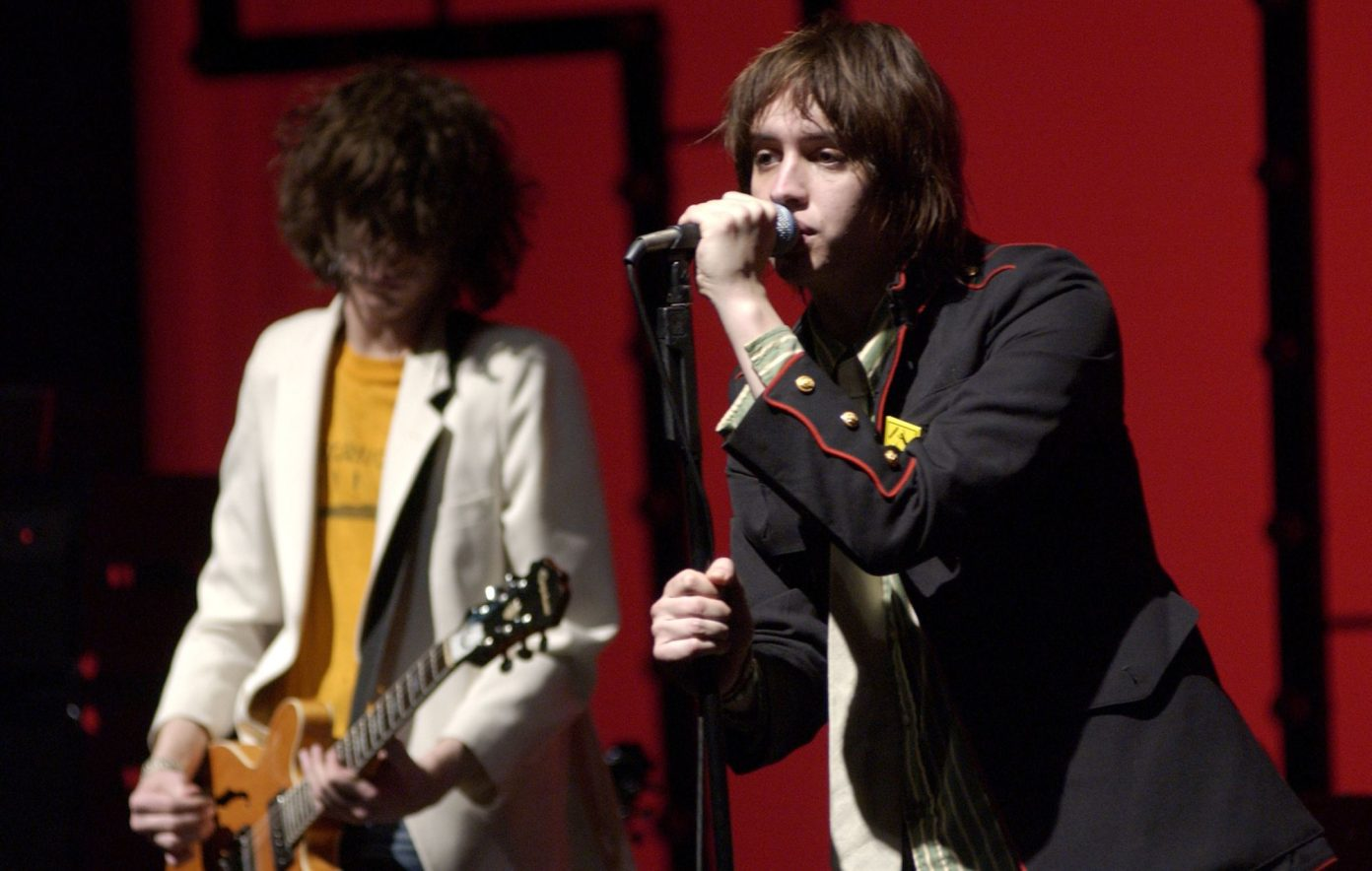
Julian Casablancas of The Strokes performs at the House of Blues in Las Vegas in 2002 (Photo by Scott Harrison/Getty Images) Julian Casablancas of The Strokes performs at the House of Blues in Las Vegas in 2002 (Photo by Scott Harrison/Getty Images)

Excitement quickly spread across New York’s indie community, which also produced bands such as Interpol, Yeah Yeah Yeahs and TV On The Radio. However, each group was independently developing its identity and sound in a city that had not yet fully embraced what was happening.

“These bands were existing separately to each other, and they met in London,” Raphael shared. “I moved to London in early 2002 and all the bands from New York and America – The White Stripes, Interpol, The Kills, Yeah Yeah Yeahs – they were coming through Club Metro. London was the glue that made New York seem like it was a scene.”

After overseeing ‘The Modern Age’ EP, Raphael already understood the particular atmosphere he hoped to preserve when recording the band. “Pro-Tools was coming in and people could make bigger productions so I said, ‘If you want to do the opposite then go out and play the songs and have that be it. Just play it, I’ll capture it, and we’ll be completely different to these manufactured songs’,” he shared.

“With the album they had more time, so they wanted to make sure everything was as perfect as it could possibly be: every detail done correctly. For young guys in rock ’n’ roll, that’s not usual either. It’s usually like, ‘Oh, just let it slip, it’s just rock ’n’ roll’. These guys were really serious about it.”

Julian Casablanca of The Strokes at the Troubadour in Hollywood in 2002 (Photo by Gina Ferazzi/Los Angeles Times via Getty Images) Julian Casablanca of The Strokes at the Troubadour in Hollywood in 2002 (Photo by Gina Ferazzi/Los Angeles Times via Getty Images)

Raphael still remembers the “incredible excitement” surrounding London in 2001. The UK became one of the earliest places to enthusiastically support The Strokes, with radio stations and clubs playing ‘Hard To Explain’ and ‘New York City Cops’ “back-to-back”.

“There was an explosion going on in the UK, but the record wasn’t scheduled to come out in the US until around September 11,” he recalled of the album’s original American release date of September 25. “Of course it was delayed because of 9/11, and then the tracklisting was changed. I don’t think the US tracklisting was as exciting as the rest of the world’s.”

Because of the sensitivity surrounding the 9/11 attacks, ‘New York City Cops’ was removed from American CD editions and replaced by ‘When It Started’. New York and the wider nation were still processing the horror of the attacks and the arrival of a profoundly different era.

“New York was fast asleep in the summer of 2001, and then completely in a sombre, freaked-out mood after the Twin Towers fell,” said Raphael. “People were in shock. I was in New York on 9/11, only a couple of miles from the site. I could actually hear it and I could see the people being effected. Everyone was tuned into the news.”

“No one was talking about music, then all these bands coming through, travelling to London, making a name, and then that was echoing back into the US. ‘Woah, these bands are getting popular overseas, so we’d better pay attention’.”

After spending years performing in bands and producing music, Raphael suddenly found himself at the centre of a rapidly expanding rock movement that was attracting worldwide attention.

“To finally have something that the world was talking about and celebrating was huge,” he admitted. “The band put my photo in the sleeve along with their own so wherever I went people were like, ‘Oh, that’s the guy from The Strokes, let’s have him produce us and invite him to a party’. It was actually phenomenal and fun. It was a rock ’n’ roll dream come true.”

Raphael returned to produce the band’s 2003 second album, ‘Room On Fire’, which he considers “phenomenally good” despite the enormous expectations created by ‘Is This It’.

“They had been touring for two years before that, so their musicianship was at a peak that I hadn’t seen before,” said Raphael. “They were more like Led Zeppelin than some skinny kids in a basement, like they were on the first one. They were really powerful and muscular on their instruments, so I would say that ‘Room On Fire’ was also a great achievement of music and I’m very happy to be associated with that.”

Their working relationship later encountered what Raphael calls a “conflict” during the third album. He was originally brought in to produce the more arena focused 2005 record ‘First Impressions Of Earth’, but David Kahne replaced him during the recording process.

“I kind of never got over that feeling of, ‘OK, now they’re with somebody else’,” admitted Raphael. “That wasn’t really my sound any more so it didn’t hit me as much. It wasn’t really a collaboration, but they were moving in their own direction and that was great. They’re artists, they deserved it, they were very cool people, so I gave them kudos but I wasn’t that into the sound after the first two.”

The later years of the 2000s brought the period eventually described as “landfill indie”, with a more polished and less imaginative version of guitar music continuing into the next decade. Raphael found much of it noticeably uninspiring.

“I didn’t like it. I moved to London as soon as I could after the release of ‘Is This It’ because I had opportunities to work there,” he said. “By around 2004, people were dressing like The Strokes and using the same patterns in the music, but it was all very slick, manufactured, corporate rock. They weren’t calling me to produce that stuff any more. I moved to Berlin right at the start of 2005 because I didn’t feel like there was anything super-infectious happening in the UK indie scene at that point.”

Razorlight, Editors and other things were happening. It became very pop, slick and commercial but with The Strokes haircuts.”

The Strokes backstage in California in 2001 (Photo by Anthony PIdgeon/Redferns) The Strokes backstage in California in 2001 (Photo by Anthony PIdgeon/Redferns)Speaking from Los Angeles after completing a studio session with “a very cool rock band” named The Abomic Toms, Raphael says the current generation of guitar groups has made him optimistic about a quieter revival taking place.

“Having lived in Berlin for the 2000s, the 2010s and 2020s, now I’m in the UK again,” he said. “There is an incredible live guitar band revival post-pandemic. I recorded 27 bands in New York City the last time I went there. That’s incredible. There are more bands in New York than I’ve ever seen before, more than the ‘80s, more than the 2000s, and there are many, many good ones. Also, the regional scenes up in the North of England, in London, in LA, in New York, they’re all popping off but they’re not connected. The media isn’t really paying attention.”

“If I recorded 27 bands, that means there’s a whole host of stuff going on in New York but only New Yorkers know about it. I find that very strange, but it is very gratifying to know that people are back after the pandemic. They don’t just want to sit back and do laptop stuff and go on the internet, they want to go and play shows and hear live music. I think that’s a beautiful thing.”

Asked whether guitar music could experience another huge cultural breakthrough similar to the one sparked by The Strokes, Raphael remains uncertain.

“I don’t know about that,” Raphael replied. “Since the year 2001, music has shifted because of streaming and the fact that it’s free. It’s now competing with a whole lot of other social and entertainment things. I don’t know if music has the same place in culture any more as it has historically. I’m not sure how great music and phenomenal bands fit into today’s cultural landscape. I’d love to see it re-emerge as something that people have to agree upon, but I’m not sure how that’s going to function.”

He continued: “There are people developing beautiful musical ideas and bands. Whether or not it can catch fire and enable them to make a living? I hope so.”

Raphael was also asked for his thoughts on The Strokes’ latest record, ‘Reality Awaits’.

“I’m very happy to see the reaction of the world,” he replied. “Whether they’re liking it or not, they’re talking about it. I think Madonna’s record [‘Confessions II’] and The Strokes’ record seem to be the talk of the summer, which is very exciting. Both of them deserve it. The Strokes are touring and everyone is raving about how great the shows are, so I’m all for this.”

The Strokes’ ‘Reality Awaits’ is available now. The group are currently touring North America before travelling to the UK and Europe in October.

COMMENTS

Leave a comment