

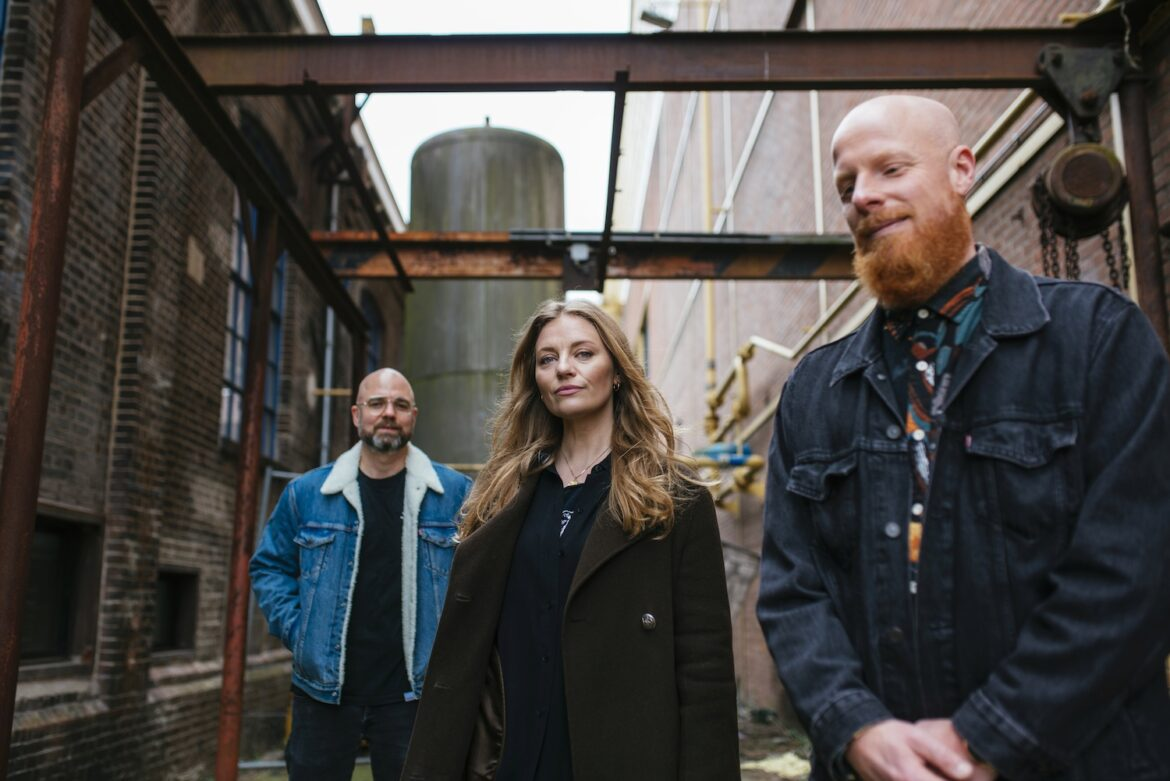
What were some of the musical experiences which planted a seed for your interest in electronic music?
My dad use to play Kraftwerk at home, but I didn’t realise until later that it might have made an impact.
However acts like Underworld, The Prodigy, The Orb, Leftfield, Front 242, NIN, Squarepusher, Aphex Twin, Massive Attack, Portishead, Tricky and drum and bass stuff like: Ed Rush & Optical, Adam F, Bad Company, Photek was the stuff I fell in love with when I was a teenager.
Most genres of music make use of electronic production means. What does the term “electronic music” mean today, would you say?
I think a lot of people associate it with dance music, while for me it was the music world outside the guitars and acoustic drums. The new sonic opportunity, that opened a new world of sound in music.
A lot of the pop songs in the 80s are electronic, but I think people don’t realise that anymore.
Disco, house, techno, drum n bass, IDM and many other genres were about a lot more than just music. For you personally, is electronic music (still) a way of life – and if so, in which way?
To be honest not at all. At home I hardly listen to dance music.
I try not be influenced too much with what happens within the scene we operate, because I think it’s more about writing beautiful songs instead of following a trend. Boxing everything into genres narrows the perspective of why we make music in the first place. And it’s hard to keep an open mind to what is possible if you get tunnel vision.
So listening to a wide range of music might help creating something new. And there’s beautiful music in every so called ‘genre’.
Debates around electronic music tend to focus on technology. What, though, were some of the things you learned by talking to colleagues or through performing and/or recording with other musicians? What role does community play for your interest in production and getting better as a producer?
In the beginning you want to learn how to bake a ‘cake’, so you absorb as much as you can from others and online tutorials and what not. But once you know, you know (and don’t get me wrong, we still learn, but it feels less important).
Then it’s about answering the question why it is you write music? Is it for fame? Money? Or are you creating because you want to create?
I think for us the hardest part is to keep challenging ourselves within the boundaries we set ourselves. You don’t want to repeat yourself and at the same time don’t want to lose yourself.
What are examples for artists, performances, and releases that really inspired you recently and possibly gave you the feeling of having experienced something fresh and new?
Thom Yorke (Radiohead, The Smile, Atoms for Peace) always inspires us in his drive to keep trying new things on a level that is jealous-making hahaha.
The last concert by Hania Rani inspired me, the way she plays piano is insane and the hybrid between electronic and acoustic is beautiful.
[Read our Hania Rani interview]
Florence and the Machine’s latest album (check out her song ‘Music by Men’) has so much raw emotion and I’m seeing her tonight so can’t wait.
Besides that I really liked the production of this Dutch hiphop duo ‘IJSLAND’ and they just released a new album which sounds real cool.
What kind of musical/sonic materials, and ideas are particularly stimulating for your own work right now?
Sampling peanut butter jars for percussion and creating white noise with our mouth is the niche we’re in right now. Exciting times …
Where do most of your inspirations to create come from – rather from internal impulses or external ones? Which current social / political / ecological or other developments make you feel like you need to respond as an artist?
It’s hard to pinpoint inspiration. It’s created by everything around us I believe (even internal impulses are probably triggered by the environment we live in), but the album is called Dreams of the Machine and it is due to development in technological evolution.
The struggle we have with how easy everything has become. How easy it is to get answers to every question. How addicted we are to our own machinery and the question, is this really what we want? Because it doesn’t feel fulfilling.
We are at a crossroads of who we want to be / become as humans.
Tell me a bit about the sounds & creative directions, artists & communities, as well as the colleagues & creative hotspots of your current hometown, please. How do they influence your music?
We have our own studio building together with the drum and bass act ‘Black Sun Empire’ (a project by my brother and a high school friend, which I’m still silently part of). And we see each other every day, but the DNB scene is so different from what we’re doing it’s hard to feed from each other directly.
That said, indirectly we can brainstorm at the lunch table a lot about the state of the industry, music technology, politics, their scene compared to ours etc. DNB draws a really young crowd, so that’s always inspiring to see.
And DNB is really technical so sometimes when we have nerd questions, we could fire away and keep up to date with the latest software haha.
Today, electronic music has an interesting relationship between honouring its roots and exploring the unknown. What does the balance between these two poles look like in your music?
When you listen to our music you can ‘unintentionally’ hear a link to the music era we grew up in. It just happens automatically. It’s a sound we cherish. And without knowing the past it’s hard to create something that doesn’t exist, because you wouldn’t know if it has already been done.
At the same time I don’t think the drive should be that you have to invent a new genre. It should be about what you want to create with music. An ever moving challenge/journey until you stop.
What were some of the recent tools you bought, used, or saw/read about which changed your perspective about production, performing, and making music?
Together with a company called Gravity Rigs, we renewed our entire live setup, because we wanted to have a redundant system that would switch automatically if one laptop would crash during our live show.
This step implicated that we had to go back to instruments that use ‘oldschool’ DINmidi and together with Iconnectivity’s MIOXM (a liobox2 and a EXBOX.MD) we could control 2 laptops at the same time. Which eventually made it real plug and play to work.
It was challenging but a good new chapter to undertake.
How do you see the role of sampling in electronic music today?
I feel it became a smaller part of the industry because with the software and computers of today the sky is the limit. Back in the 90s the technology was still limited and therefore needed to sample good sounding drums or riffs to get to a certain level.
The danger today is more that websites like splice make it almost too easy to find good samples. It might turn us all lazy..
What are some of the most recent innovations in sound design for you - and what are currently personal limits to realising the sounds you have in your mind?
To be honest I don’t really know. I like the redundant stuff I talked about above, but that has nothing to do with sound design hahaha. Serum 2 was a real nice followup on serum one, but when it comes to vst instruments I think U-he is the one for us.
Trying not to sound like your last record while not exactly knowing what you do want to sound like.
In as far as it is applicable to your work, how would you describe the interaction between your music and DJing/DJ culture and clubs?
I feel our music lives in both worlds. It works at home, alone or on your headphones in a commute to work and it works in clubs on a night out, because we write music that crosses the fixed borders of what a certain genre might be.
I believe a lof of DJs find it hard to place our music in their sets. So it’s an interesting situation.
How, would you say are your live performances and your recording projects connected at the moment? How do they mutually influence and feed off each other?
I believe that the songs we write now are more focused on being a song than being a track you (or others) have to be able to play out. So fewer limitations on structure and bpm.
Even if AI will not entirely replace human composition, it looks set to have a significant impact on it. What does the terms composing/producing mean in the era of AI, do you feel?
It’s hard. For me it feels unfulfilling to have AI create my music and if it becomes so easy it might lose its value.
So on a wider scale it might turn us into the ‘just’ consuming humans in Pixar’s ‘Wally’.

Tinlicker Interview by Meesterwerk
“Boxing everything into genres narrows the perspective of why we make music in the first place.”
-
Olivia Rodrigo’s Daisy Chain Fields Festival Raises $20 Million
-
Trivium and In Flames Reveal Dates for Major 2027 UK and European Tour
The tour includes a slot at Alexandra Palace next spring
-
Ice Spice Appears on Kanye West & Ty Dolla $ign’s ‘New Body,’ New Report Says
Kanye West and Ty Dolla $ign never got to release "New Body" with Nicki Minaj's verse.
-
Angine de Poitrine Spark Another Viral Moment With Surprise Billboard Canada Awards Appearance
The mysterious duo picked up the Global Breakthrough prize at the Toronto ceremony
-
Everywhere At Once Adds Fatboy Slim, Lucy Spraggan, Gene, D Double E, And More To Massive Festival Bill
They join The Lathums, Becky Hill, Rizzle Kicks and more in a line-up that supports grassroots music venues across the country
-
Red Hot Chili Peppers Land Over $300 Million From Catalog Sale
Warner Music Group, the band's home since 1991's Blood Sugar Sex Magik, acquires the Peppers' catalog as part of Bain Capital joint venture
-
Stella Lefty challenges Sienna Spiro for Number 1 UK single with Boston
-
Tinashe shares the rule she follows before accepting a support slot
-
Lady Gaga Demands Legal Costs From Surf Brand Following Failed ‘Mayhem’ Case
-
Selena Quintanilla’s Estate Profits At Center Of Brother’s Lawsuit
-
Lancey Foux Reflects on His Legacy With ‘The Time Of Our Lives’
With his first solo studio album in four years arriving on streaming platforms, the underground rap iconoclast talks to NME about the lofty expectations placed upon him and what lies ahead
-
Yeah Yeah Yeahs Announce Worldwide Cinema Screenings of ‘Hidden in Pieces’
A few David Lynch classics are among the films being shown
-
D-Block Europe Teams Up With French Montana for ‘Fully Loaded’
"Fully Loaded" by D-Block Europe and French Montana is a brief cut, but traded verses between these MCs make it feel grander.
-
Peezy Joins Forces With Babyfxce E On “I Can’t Tell”
-
Smiley Drops New Song "Two Tone"
Smiley is back with his new single, "Two Tone," which carries forth his signature style that has proven to be polarizing.
-
“U Dig Me” Marks Another Release From Kenny Muney
Kenny Muney is a Memphis artist whose new album "U Dig Me" is coming soon, and on Wednesday, the title track was released.
-
Cochise Brings a Fresh Sound on “Skin Care”
Cochise has fans demanding a new album soon, but at least he will hold them over for now with the new single "SKIN CARE."
-
Rocket Rese Drops Heavy New Collaboration "BAPTIZED" With SosMula
Rocket Rese shared his first project of his career this year and it doesn't look like he's going to slow down for the rest of 2026.
-
Dead Kennedys Guitarist Claims Jello Biafra Is Holding Back Potential Reunion
"It's not an issue for me or Klaus," founding Dead Kennedys guitarist East Bay Ray explains.
-
LE SSERAFIM announce 2025 ‘Easy Crazy Hot’ world tour
Featuring concerts in Asia, North America and more
-
Mischa Barton reveals she’s a huge Oasis fan: “They’re the coolest”
“What kind of self-respecting Brit would I be if I wasn’t?”
-
Eem Triplin drops “Duya” single ahead of upcoming album
Eem Triplin, once known for crafting type-beat internet productions, has smoothly transitioned into a full-fledged artist in his own right.
-
Kiana Ledé On Being Indie, ‘Cut Ties,’ And Singlehandedly Extending Spooky Season
The singer detailed how she intertwined love and horror for 'V Sessions.'
-
Royal Deb displays her Jamaican roots new reggae single “Somebody For Everybody”
Since Royal Deb was just a child in St. Ann, Jamaica, she has been immersed in the reggae music scene.



COMMENTS
Leave a comment