
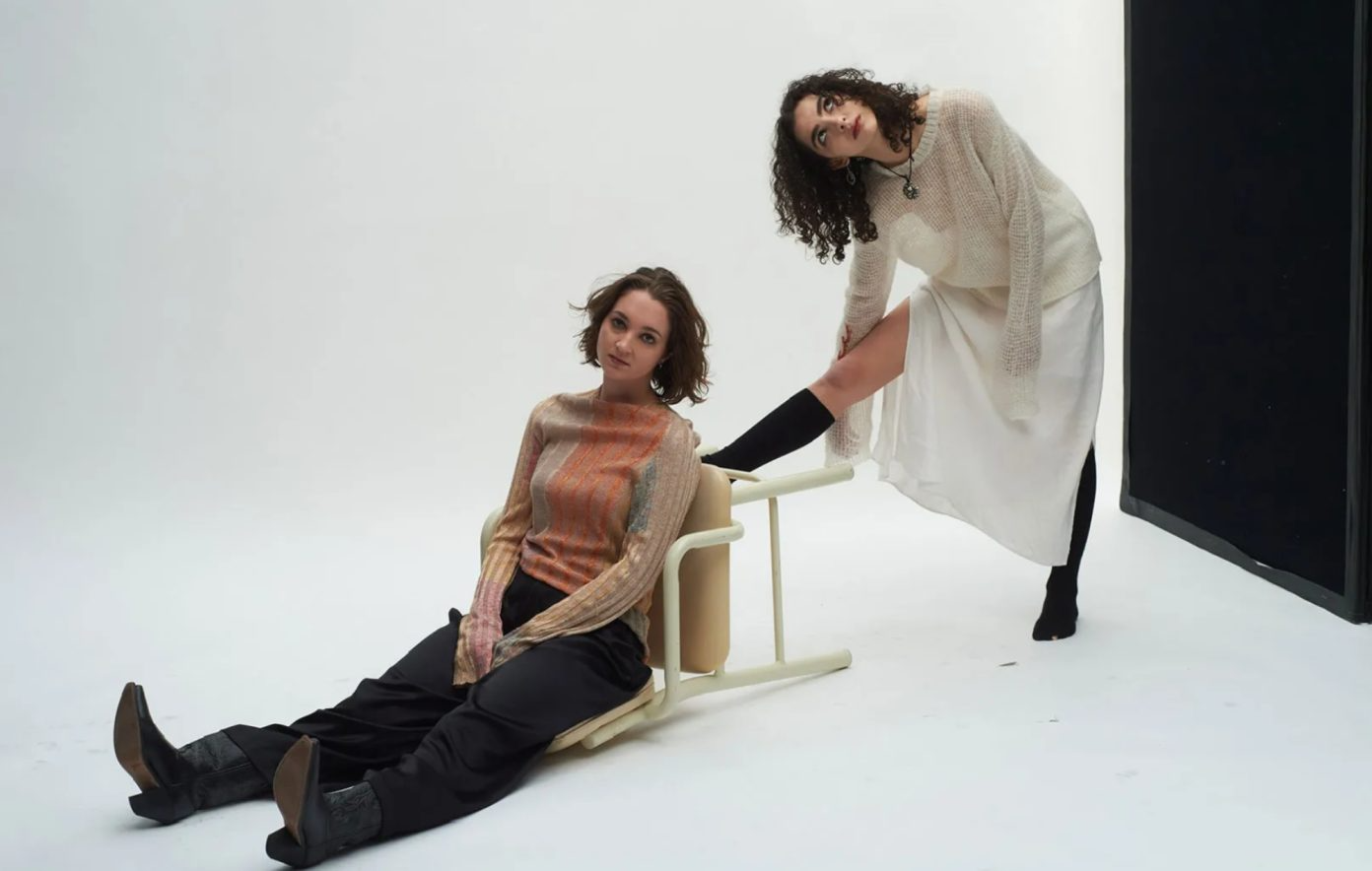

During KatzPascale’s first show in Leeds earlier this summer, a 55-year-old man cried for the first time since his wedding. In their video diary of the tour, he appears on grainy film, bewildered as he and his wife tell the camera, as if delivering a testimony, how, before that night, tears hadn’t fallen from his eyes since 2001.
The response isn’t uncommon for the live shows of saxophonist Sammi Katzmann and cellist/vocalist Jenna Pascale, where audience members pour into the streets afterwards, heralding the experience as a catharsis, an awakening, perhaps even an exorcism. Since the first moment they began collaborating, they’ve carved out an eclectic, cinematic take on neo-classical, able to stir dormant emotions in even the most stoic.
Though previous coverage of the project may allude to the fact that Katzmann and Pascale met through a mutual friend, they tell NME a different story. After briefly colluding with each other, they explain in a deadpan manner that their first meeting actually took place when Katzmann was lifeguarding in Connecticut, and Pascale was drowning. “And also being attacked by a shark,” Pascale recalls, casually.
They were friends for years since that fateful encounter, but only began making music together in 2024, after both reaching a point of frustration with the New York indie rock scenes they’d been meandering separately. In part, it was the “huge egos and lack of actual talent”, as Pascale bluntly puts it, that had their patience wearing thin. “There was no thought behind a lot of these projects,” she explains. “They were fun, but at a certain point I realised I’d like to make something that actually made me feel some kind of way instead of just ‘we’re gonna drink a bunch of beer’.”
There was also an element of frustration with the fact that their instruments were constantly being reduced to mere background sound by bands attempting to adorn music that was, actually, quite boring. They had both been classically trained from a young age, but found themselves in sessions being asked to play three monotonous notes for “typically male indie rock bands when the front person is like, ‘I need something to make my band more interesting’,” Katzmann explains. “We had both thought of music pretty negatively in different contexts throughout our lives, and we heavily bonded over that. We had similar intentions of wanting to make deeper, untraditional music and introduce classical into the pop world.”
Soon after allying over their shared indifference, they decided to play a show together, with only one quick rehearsal beforehand. “Everyone was standing, and when we started playing, everyone just sat on the floor and went into this trance,” Pascale recalls. Though it was largely improvised, the emotional response from the audience and the undeniable feeling of kismet between them conjured the feeling that they had struck gold, and they began rehearsing together with the idea of making a more serious project.
Over the past two years, their sound has steadily been forged through a series of live shows for intimate audiences in museums, churches and galleries across New York. By treating the spaces they play in with almost equal importance to the music, they seek to create an environment wholly separate from the outside world; the room is usually shrouded in darkness, and audience members are welcomed to sit or even lie on the floor, leaving the weight of their bodies behind. At some gigs, they’ve even blindfolded fans, intensifying the weight of the music. “We want people to feel that they came with something and then left with something different,” Katzmann says. “A lot of people, actually, end up feeling a lot lighter after our shows, which is great to hear. We don’t like people leaving depressed, but it’s usually a cathartic release of emotions.”
In an age of detachment, terminal online-ness and AI, the gigs offer a sensation that feels increasingly hard to find. “You know when you’re a kid, and you’re lying awake at night, and you’re just seeing shit in your brain before you fall asleep? I feel like we don’t do that anymore because everyone is just putting a show on or scrolling,” Pascale ponders. “[The shows] are like putting you back to your child self and letting your imagination take over again.”
“Playing together is the ultimate distraction from all of the other distractions in the world” – Sammi Katzmann
It’s a notion carried into their debut EP ‘Elegy’, released earlier this year. The project is unique in that every song on it was played and perfected live for months before being recorded, with each gig in some way informing the way it exists today. It’s why pressing play feels like bearing witness to two musicians born to play together, their instruments circling each other in a dialogue that drifts from deeply harrowing and frantic to delicate, sombre and, for brief moments, even sweet.
Though unmistakably chamber music, the EP also contains elements of their eclectic range of influences, offering a sonic scrapbook that shifts from Ethiopian jazz in Katzmann’s saxophone playing to references to their shared childhood love of The Beatles in the way Pascale’s cello slides down in harmonic, repetitive overlapping on ‘An Elephant Never Forgets’ – a direct nod to ‘Tomorrow Never Knows’. Another key inspiration was ‘Clube da Esquina’, a collaborative album from Brazilian musicians Milton Nascimento and Lô Borges, which deeply informed Katzmann and Pascale’s shared musical language. “We ultimately were very, very inspired by that album,” Katzmann says. “The melodic ideas are just so, so rich and so, so sticky, as we like to say.”
Since releasing ‘Elegy’, they’ve embarked on what Pascale describes as “the best fucking summer ever” (though she quickly adds: “Except the cursing. My dad read another interview of ours, and he’s like, ‘You’re cursing every second.’”) They played their first UK tour, which included a show at London’s St Pancras Old Church, where Fred Again.. slipped into the crowd incognito. He liked what he heard, and invited them to be involved in the recording for his recent collaborative mixtape with Latin Mafia, ‘9 Months & 50 Hours’, which saw them head to Mexico City to join the fully live-streamed, 50-hour creative process which culminated in the project.
“It was really incredible to watch Fred cook for so long; he’s just a fucking genius,” Pascale says. “I know everyone talks about him a lot, but he really is just that guy who can work forever and get so much done so quickly. All the choices he makes are awesome. He’s got a direct, open channel to fucking music heaven.”

The experience introduced a desire for the duo to continue working and experimenting with more artists across every genre, from classical to rap. Dream collaborations, they say, would be Björk and Lil Yachty, the latter of whom they already worked with indirectly on the ‘9 Months & 50 Hours’ mixtape, “but we’d love to work with him directly as well,” Katzmann says. “We just want to hit all different realms and learn from other people and see what we can create.”
A creative relationship like theirs is rare – one that spawns art which somehow, without words, can depict the deepest human experiences. It’s a calling that cannot be ignored, which is why, they tell NME, new music is already on the way. “Playing together is the ultimate distraction from all of the other distractions in the world,” Katzmann smiles. “It’s like the reset button. When we play music, we can just be totally present and real in our own minds. And it’s amazing to be able to extend that to others who are witnessing it.”
KatzPascale’s ‘Elegy’ EP is out now via Sonic Guck.
-
Ice Spice Appears on Kanye West & Ty Dolla $ign’s ‘New Body,’ New Report Says
Kanye West and Ty Dolla $ign never got to release "New Body" with Nicki Minaj's verse.
-
Angine de Poitrine Spark Another Viral Moment With Surprise Billboard Canada Awards Appearance
The mysterious duo picked up the Global Breakthrough prize at the Toronto ceremony
-
Everywhere At Once Adds Fatboy Slim, Lucy Spraggan, Gene, D Double E, And More To Massive Festival Bill
They join The Lathums, Becky Hill, Rizzle Kicks and more in a line-up that supports grassroots music venues across the country
-
Red Hot Chili Peppers Land Over $300 Million From Catalog Sale
Warner Music Group, the band's home since 1991's Blood Sugar Sex Magik, acquires the Peppers' catalog as part of Bain Capital joint venture
-
Guns N’ Roses Debut Nothin’ And Atlas At Tour Opening Show
Guns N’ Roses Debut Nothin’ And Atlas At Tour Opening Show
-
Turning Point USA reveals performers for its All-American Halftime Show
Turning Point USA first revealed plans for its Super Bowl Halftime Show alternative in October.
-
KatzPascale Bring A Hypnotic New Sound To Chamber Music
In stumbling upon a once-in-a-lifetime creative synergy, the saxophonist and cellist, co-signed by Fred Again.., are rewriting the rules of live music and making you cry in the process
-
John Summit takes a break from touring to “recharge” ahead of fall shows
Summit will no longer play four European festivals this month.
-
Ellie Goulding Files Lawsuit Over Live Nation “Conflict Of Interests”
The suit claims TaP Management's ties to Live Nation were not disclosed to her while she was signing deals with the entertainment company
-
Akriila shares a special playlist to mark the arrival of her new album
The Chilean artist teases her second record, ‘Lucy Miró Al Mundo Y Notó Que Está Girando, Es Mi Segundo Disco’
-
JAY-Z Completes His New Album As Release Faces One Final Delay
Ray Daniels was recently on his podcast, where he revealed the latest development concerning JAŸ-Z and his new album.
-
Listen to Brandon Flowers’ powerful new track ‘Tiger’s Blood’
The third solo album from The Killers' frontman, 'Thrasher', arrives next week
-
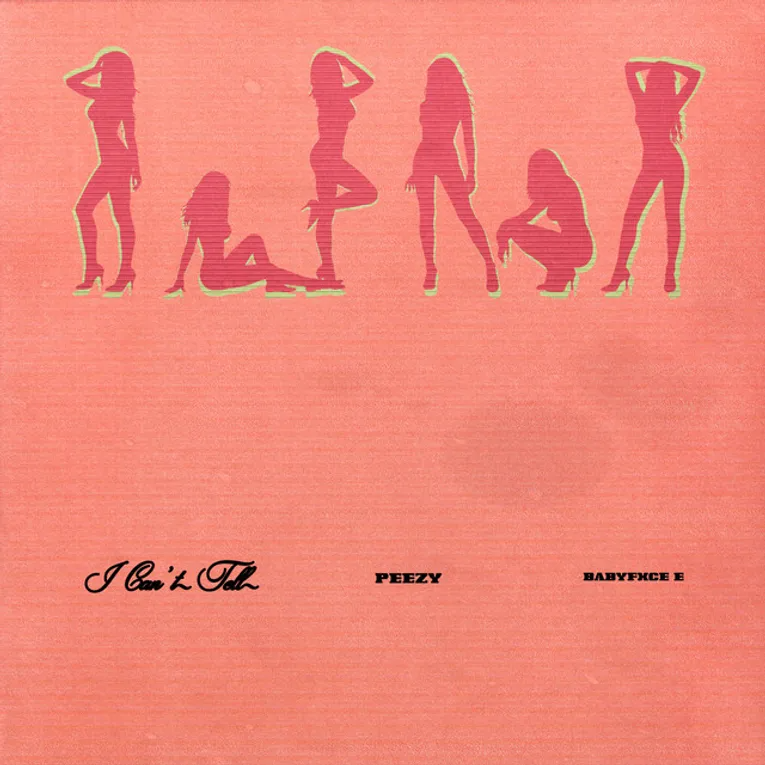
Peezy Joins Forces With Babyfxce E On “I Can’t Tell”
-
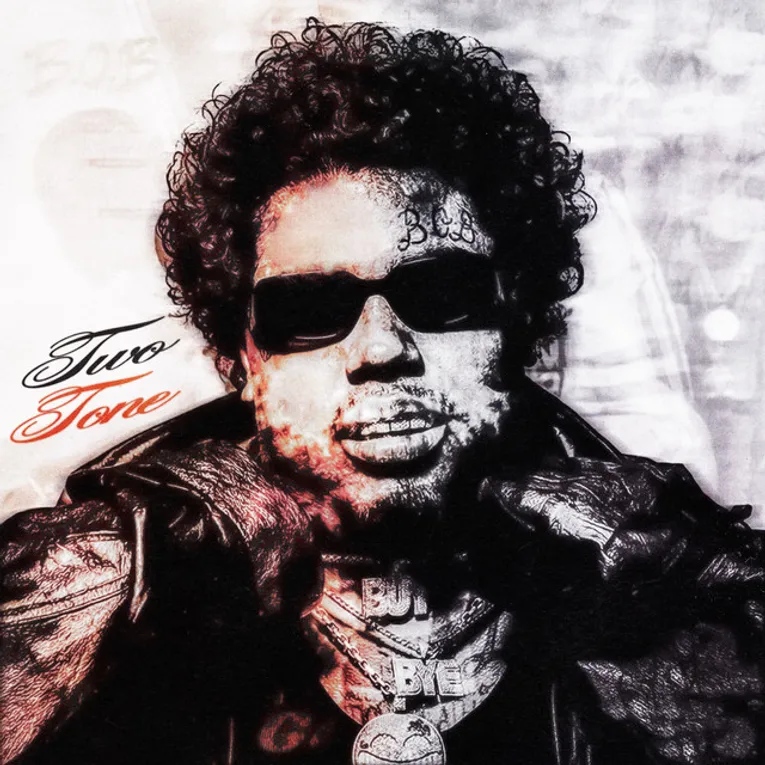
Smiley Drops New Song "Two Tone"
Smiley is back with his new single, "Two Tone," which carries forth his signature style that has proven to be polarizing.
-
“U Dig Me” Marks Another Release From Kenny Muney
Kenny Muney is a Memphis artist whose new album "U Dig Me" is coming soon, and on Wednesday, the title track was released.
-
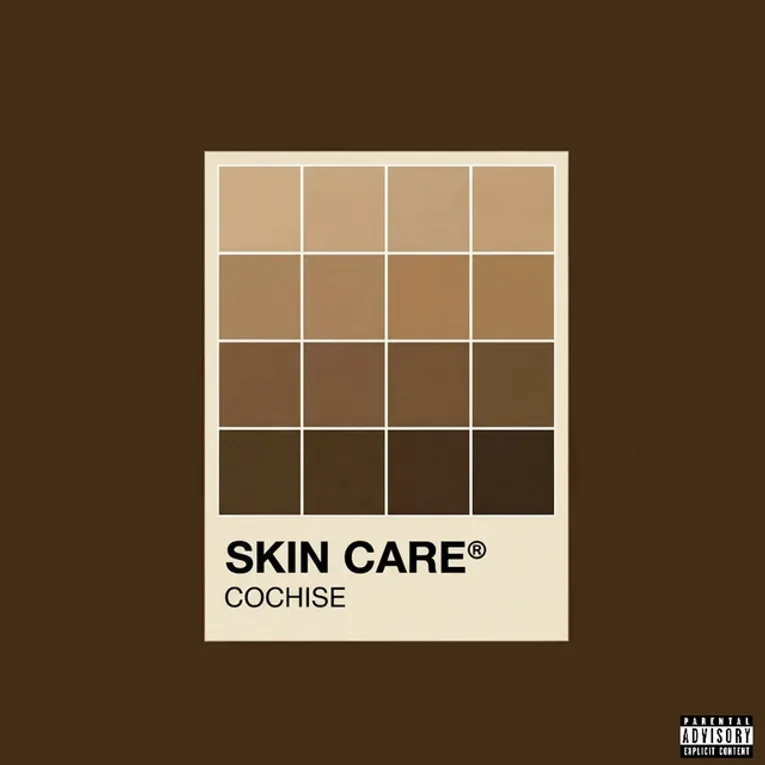
Cochise Brings a Fresh Sound on “Skin Care”
Cochise has fans demanding a new album soon, but at least he will hold them over for now with the new single "SKIN CARE."
-
Rocket Rese Drops Heavy New Collaboration "BAPTIZED" With SosMula
Rocket Rese shared his first project of his career this year and it doesn't look like he's going to slow down for the rest of 2026.
-
BOAT REMIX – Song by Trim & Pooh Shiesty
Trim's "BOAT" gained a lot of motion last year, and now we have a 2026 remix with none other than Pooh Shiesty.
-
Dead Kennedys Guitarist Claims Jello Biafra Is Holding Back Potential Reunion
"It's not an issue for me or Klaus," founding Dead Kennedys guitarist East Bay Ray explains.
-
LE SSERAFIM announce 2025 ‘Easy Crazy Hot’ world tour
Featuring concerts in Asia, North America and more
-
Mischa Barton reveals she’s a huge Oasis fan: “They’re the coolest”
“What kind of self-respecting Brit would I be if I wasn’t?”
-
Eem Triplin drops “Duya” single ahead of upcoming album
Eem Triplin, once known for crafting type-beat internet productions, has smoothly transitioned into a full-fledged artist in his own right.
-
Kiana Ledé On Being Indie, ‘Cut Ties,’ And Singlehandedly Extending Spooky Season
The singer detailed how she intertwined love and horror for 'V Sessions.'
-
Royal Deb displays her Jamaican roots new reggae single “Somebody For Everybody”
Since Royal Deb was just a child in St. Ann, Jamaica, she has been immersed in the reggae music scene.

 Julian Casablancas of The Strokes performs at the House of Blues in Las Vegas in 2002 (Photo by Scott Harrison/Getty Images)
 Julian Casablanca of The Strokes at the Troubadour in Hollywood in 2002 (Photo by Gina Ferazzi/Los Angeles Times via Getty Images)
 The Strokes backstage in California in 2001 (Photo by Anthony PIdgeon/Redferns)Speaking from Los Angeles after completing a studio session with “a very cool rock band” named The Abomic Toms, Raphael says the current generation of guitar groups has made him optimistic about a quieter revival taking place.
COMMENTS
Leave a comment