

.png)



What were some of the musical experiences which planted a seed for your interest in electronic music?
Rave and club culture were my starting point, gradually transforming into a deeper curiosity for experimental sound.
Most genres of music make use of electronic production means. What does the term “electronic music” mean today, would you say?
For me, electronic music goes beyond the tools used to make it. It’s a way of reimagining what music can be.
In that sense, it’s not only about using electronic tools, but about a mindset, a way of thinking about music itself, that’s indeed the source of its fascination.
Disco, house, techno, drum n bass, IDM and many other genres were about a lot more than just music. For you personally, is electronic music (still) a way of life – and if so, in which way?
I think electronic music has become too broad to describe as a single way of life.
Speaking personally, many of us who make electronic music still have some kind of connection to club culture — even if only in a nostalgic sense, as in my case. But I feel more closely aligned with experimental music than with electronic music as a whole.
I wouldn’t call it a lifestyle, but there are certain choices and sensibilities that lead you toward this field — and those are probably shared by many of us.
Debates around electronic music tend to focus on technology. What, though, were some of the things you learned by talking to colleagues or through performing and/or recording with other musicians? What role does community play for your interest in production and getting better as a producer?
Almost everything!
Even though I’d describe myself as a bit of a nerd who loves spending hours alone solving problems, nothing compares to interacting with other musicians. It’s like stepping out of the rehearsal room into the real world.
Music becomes real once you can share it — that’s when you truly see what works, what doesn’t, and how it connects with others.
What are examples for artists, performances, and releases that really inspired you recently and possibly gave you the feeling of having experienced something fresh and new?
Recently, I saw a noise performance by Miao Zhao that was absolutely incredible — powerful and very precise at the same time. Aya was also fantastic, in a completely different way.
And I’ve been really inspired by the work of Tapiva Svosve and Maria Bertel as well.
What kind of musical/sonic materials, and ideas are particularly stimulating for your own work right now?
I’ve been fascinated by the idea of bringing an electroacoustic setup into an underground framework — using it to sculpt rough, industrial textures.
I’m also drawn to the dialogue between music and space: exploring the frequencies that make a room resonate, and the ways sound can be felt through the body as much as heard through the ears.
Where do most of your inspirations to create come from – rather from internal impulses or external ones? Which current social / political / ecological or other developments make you feel like you need to respond as an artist?
I see my creative impulses as a dialogue between the outside world and my inner instinct.
External events shape me as a person — and inevitably, as a musician — but what guides me most is the emotional response, not a fixed concept or method. I produce intuitively and try not to adhere to any predetermined rules.
There are many issues feeding a sense of urgency or anger in me: for instance, the genocide in Gaza leaves me deeply affected. I might not address it directly in sound, but whenever I step on stage, I feel the responsibility to name it — to acknowledge that this world we make music in is not separate from these realities.
Tell me a bit about the sounds & creative directions, artists & communities, as well as the colleagues & creative hotspots of your current hometown, please. How do they influence your music?
Bern is quite a small city, but for its size, there’s a surprisingly lively scene. In general, there’s a very supportive mood among artists. The Reitschule hosts everything from punk and reggaeton to electronic and wave — big concerts and smaller shows alike.
At the moment, my personal hotspot is the venue Dampfzentrale, which combines contemporary dance, performance, and music. Most of the inspiring shows I’ve seen in Bern over the past few years have taken place there.
I also highly recommend Radio Bollwerk, which provides a great overview of the local scene. On the artist side, I follow the work of the Bern collective CRTTR, as well as the labels unvague and Forcefield Records. And of course, Everest Records!
Today, electronic music has an interesting relationship between honouring its roots and exploring the unknown. What does the balance between these two poles look like in your music?
That’s a good question!
I’d say I’m definitely more in explorer mode — I like pushing into unknown sonic territories.
How do you see the role of sampling in electronic music today?
Sampling today is more than just reusing sounds; it’s a way to enter a dialogue with music, history, and culture. It allows artists to reinterpret and transform existing material, giving it new context and meaning.
For me, it’s not about imitation — it’s about using fragments of the world and music around me to build something that resonates in the present, something that can surprise both the listener and myself.
What are some of the most recent innovations in sound design for you - and what are currently personal limits to realising the sounds you have in your mind?
Personally, one of the most exciting recent developments in sound design is that computers are finally fast enough to handle what used to push them to the limit — especially for live performance. I work mostly digitally, with a lot of live processing, and it’s amazing to be able to perform in real time what a few years ago would have made my computer crash.
As for limits, I often dream of clubs with many more speakers, so that immersive sound could truly be realized on stage. That’s still a challenge, but it’s something I hope to explore further.
In as far as it is applicable to your work, how would you describe the interaction between your music and DJing/DJ culture and clubs?
DJ culture and clubs have definitely influenced me — it’s a heritage I deeply admire.
That said, technically and conceptually, DJing and my own music remain two very different practices.
How, would you say are your live performances and your recording projects connected at the moment? How do they mutually influence and feed off each other?
There’s a strong dialogue between my live performances and my recordings — each feeds the other.
In production, I’m always considering how the material might exist on stage; in recording, I often play live first and then reshape it afterwards.
They’re two sides of the same coin, exploring the same musical idea.
Even if AI will not entirely replace human composition, it looks set to have a significant impact on it. What does the terms composing/producing mean in the era of AI, do you feel?
Composing and producing are, at their heart, acts of being human. Music emerges from the deepest layers of a person, a way to express oneself both directly and abstractly.
That authenticity is beyond the reach of AI — and it’s precisely what makes music so fascinating for me as a listener. I want to encounter the world of the person behind the sounds, to feel their presence and vision through the music.
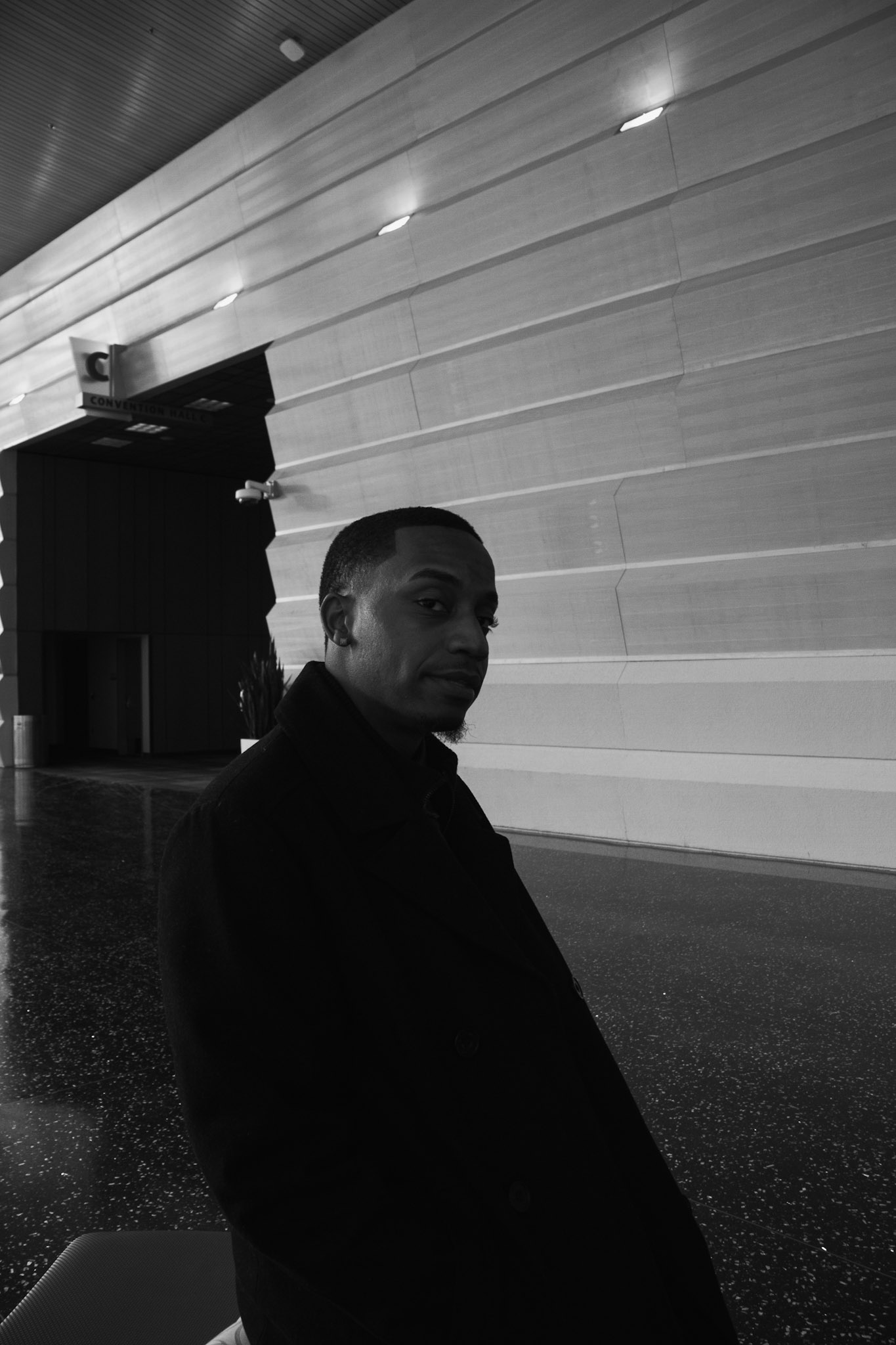
 Luz González Interview Image by Pablo Kaufmann
“Music becomes real once you can share it.”
Video
-
Guns N’ Roses Debut Nothin’ And Atlas At Tour Opening Show
Guns N’ Roses Debut Nothin’ And Atlas At Tour Opening Show
-
Turning Point USA reveals performers for its All-American Halftime Show
Turning Point USA first revealed plans for its Super Bowl Halftime Show alternative in October.
-
Rilo Kiley’s Jenny Lewis marks turning 50 with playful dog wedding
Muzzle Tov
-
Lil Uzi Vert sends Christmas gifts to fans who wrote to them
Giving back has always been part of Lil Uzi Vert’s relationship with fans, and it is still just as meaningful every time.
-
Bruce Springsteen Honors Joe Ely “We’ve Lost an American Classic”
Ely, a cornerstone of Texas music, passed away Monday at 78.
-
Diddy Reportedly Plans $1 Billion Legal Battle With Netflix Over 50 Cent’s Docuseries
According to Diddy’s representatives, the Netflix docuseries produced by 50 Cent is a “shameful hit piece,” and they argue it uses footage that was stolen from them.
-
Megan Thee Stallion Hospitalized After Getting Sick During Moulin Rouge! The Musical Performance
Megan Thee Stallion was rushed to hospital after falling ill amid her performance in Moulin Rouge! The Musical on Tuesday night.
-
Jessie Reyez Drops New EP ‘$TILL PAID’ With Stormzy Feature
It celebrates one year since she dropped the ‘PAID IN MEMORIES’ album
-
Hilary Duff Says She Still Feels Like A Child Star While Looking Back At ‘Lizzie McGuire’
She wasn't a fan of the super spicy chicken wings, which she said caused a "hellhole" in her throat.
-
Rosalía Forced to Stop Show Due to Food Poisoning
-
Jay Z Announces Extra Innings Third Yankee Stadium Concert
Tickets to the July 12 show are on sale now
-
Shakira Reveals When And Where Her Spain Residency Will Take Place
The concert series will be this fall at the Shakira Stadium, an ephemeral venue promising an immersive experience.
-
BOAT REMIX – Song by Trim & Pooh Shiesty
Trim's "BOAT" gained a lot of motion last year, and now we have a 2026 remix with none other than Pooh Shiesty.
-
Everybody Ain't Gone Get You - Song by JasonMartin
Jason Martin and DJ Flippp are gearing up for their new project "Quik Flip," and their new single "Everybody Ain't Gone Get You" is here.
-
SZA Releases “Save The Day” (From “Hoppers”)
-
Benny The Butcher links up with Grafh for “Squeeze First”
Benny The Butcher links up with fellow New York rapper Grafh on the new single “Squeeze First.”
-
WGFT (Remix) - Song by Gunna featuring Chris Brown
CB adds his own flavor to the remix.
-
Rap Up 2025 marks Uncle Murda’s yearly recap
Uncle Murda has returned with his yearly rap recap, packing the track with sharp bars about Diddy, Young Thug, Summer Walker, and plenty of other names.
-
Dead Kennedys Guitarist Claims Jello Biafra Is Holding Back Potential Reunion
"It's not an issue for me or Klaus," founding Dead Kennedys guitarist East Bay Ray explains.
-
LE SSERAFIM announce 2025 ‘Easy Crazy Hot’ world tour
Featuring concerts in Asia, North America and more
-
Mischa Barton reveals she’s a huge Oasis fan: “They’re the coolest”
“What kind of self-respecting Brit would I be if I wasn’t?”
-
Eem Triplin drops “Duya” single ahead of upcoming album
Eem Triplin, once known for crafting type-beat internet productions, has smoothly transitioned into a full-fledged artist in his own right.
-
Kiana Ledé On Being Indie, ‘Cut Ties,’ And Singlehandedly Extending Spooky Season
The singer detailed how she intertwined love and horror for 'V Sessions.'
-
Royal Deb displays her Jamaican roots new reggae single “Somebody For Everybody”
Since Royal Deb was just a child in St. Ann, Jamaica, she has been immersed in the reggae music scene.



COMMENTS
Leave a comment