

.png)



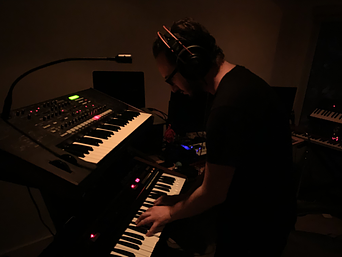
Charles Barton is an electronic music artist who creates emotional and reflective songs. His latest track, “Lost Space,” is a minimal house and pop song that you can sit back and relax with but also get up and dance to. The atmosphere Charles crafted is centered around the whirlwind of emotions people can go through as they lay in bed at night.
When creating “Lost Space,” Charles wanted to capture a floaty feeling of being lost in your mind. By combining synthesizers and gentle percussion, the floating journey eases into an energized outro. The outro captures the controlled chaos of thoughts fully taking over the mind.
“When I was writing the lyrics, I was thinking about the times in my life when I’ve been trying to sleep but that anxious feeling is still there. It’s that experience of being lost in the stress. The lights are out and your mind is going crazy. Part of it is also surrendering to these feelings temporarily because fighting them is even harder. Sometimes you just have to let your mind do what it’s going to do,” he said.
His upcoming project, Grey Thoughts contains other tracks that deal with internal thought processing. There are songs centered around identity that discuss how people view themselves and how others view them and how these two perspectives can overlap together in moments of reflection.
“You’re in this gray space of having those outside influences but also your own feelings and thoughts. You’re caught between them,” he said.
In addition to the reflective soundscapes Charles creates, he also does something unique with his electronic music - he adds acoustic elements. With his background being the symphony orchestra world, Charles is well versed in a variety of instruments including guitar, violin, clarinet and unique woodwinds like the ocarina. By adding these acoustic elements, he aims to enhance the texture of his music with warmth.
“I like building the electronic soundscape and then bringing in the acoustic elements to add color, texture and an organic feeling. I don’t want it to feel too saturated with the digital sounds,” he said.
While the electronic music world is known for pulse pounding club music, Charles purposely sought out to do the opposite with “Lost Space.” By creating something with a slower tempo, he wanted to give people something different from both a tempo standpoint and a song structure standpoint. The track does have a hook, an entrancing vocal loop from Charles himself, but it has no verses.
“I wanted to play around with the idea of a non-traditional song structure. I wanted to do lyrics that are just the chorus. I was thinking of doing something simpler that people can still enjoy and appreciate the unique chorus focused aspect of it,” he said.
In addition to his solo music, Charles has also worked with multiple vocalists, especially ones from the R&B world. When collaborating with vocalists, Charles says he lets himself become the “background” and allows the artist to step into the foreground. In a literal sense, his production is the background for the artist’s vocals but he is also providing the sonic bed for those vocals.
Charles Barton is looking forward to releasing Grey Thoughts soon. He has plans for more music too which will take a different route sonically and have a new special aspect.
“Lost Space” by Charles Barton is available on streaming services now.
You can hear more of Charles Barton’s reflective music by keeping up with him on these platforms.
Website | Apple Music | Spotify | Instagram
The Starlight PR Team thanks Charles Barton for taking the time to speak with us.
-
Rilo Kiley’s Jenny Lewis marks turning 50 with playful dog wedding
Muzzle Tov
-
Lil Uzi Vert sends Christmas gifts to fans who wrote to them
Giving back has always been part of Lil Uzi Vert’s relationship with fans, and it is still just as meaningful every time.
-
Bruce Springsteen Honors Joe Ely “We’ve Lost an American Classic”
Ely, a cornerstone of Texas music, passed away Monday at 78.
-
Diddy Reportedly Plans $1 Billion Legal Battle With Netflix Over 50 Cent’s Docuseries
According to Diddy’s representatives, the Netflix docuseries produced by 50 Cent is a “shameful hit piece,” and they argue it uses footage that was stolen from them.
-
Oasis’ Video Director Opens Up About Live ’25 Planning, Saying It Took 14 Months And Held “Well Kept Secrets”
Fans joked that the Gallaghers had “tricked” them into believing they weren’t speaking before the shows were announced.
-
Babyshambles Celebrate Patrick Walden at Their Massive Brixton Concert
Following the triumphant performance, drummer Adam Ficek shared that the evening played a key role in helping him and the band work through their grief.
-
Charles Barton paints reflective soundscapes with his single “Lost Space”
Charles Barton is an electronic music artist who creates emotional and reflective songs.
-
Ray J speaks out about treatment during health struggle
Ray J has shared a new update on his medical care after previously saying he may only have months left to live.
-
Kneecap come back with hard hitting single ‘Liars Tale’
The trio will mark the release of ‘FENIAN’ with a string of out store appearances.
-
The Kooks open up on their relationship with Arctic Monkeys
-
Pharrell receives France’s highest honor at event attended by Future
Emmanuel Macron highlighted Pharrell’s impact on music and praised his creative leadership and influence through his work with Louis Vuitton.
-
Donald Trump skips Super Bowl and criticises Bad Bunny and Green Day booking
"I’m anti-them,” he said of the musicians
-
WGFT (Remix) - Song by Gunna featuring Chris Brown
CB adds his own flavor to the remix.
-
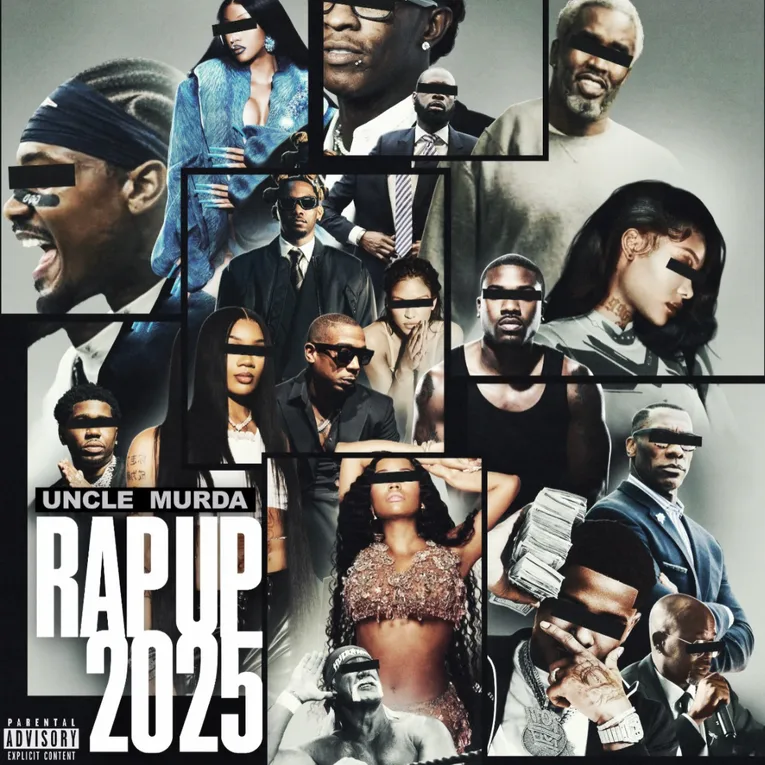
Rap Up 2025 marks Uncle Murda’s yearly recap
Uncle Murda has returned with his yearly rap recap, packing the track with sharp bars about Diddy, Young Thug, Summer Walker, and plenty of other names.
-
“Paper Low” Is DaBaby’s Latest Track
-
Introducing “44 Bars,” the Latest Release from Ludacris
Ludacris surprised fans with an early holiday gift in the form of “44 Bars,” a nonstop display that proves his writing skills are as sharp as ever.
-
Trippie Redd’s Song ‘Can’t Count Me Out’
Trippie Redd is building up to his new album “NDA,” and “Can’t Count Me Out” makes it clear he is performing at his peak.
-
Road Nights: A Track by Bone Thugs-N-Harmony
Bone Thugs-N-Harmony are stepping back into the spotlight as they get set to release their first project in four years.
-
Dead Kennedys Guitarist Claims Jello Biafra Is Holding Back Potential Reunion
"It's not an issue for me or Klaus," founding Dead Kennedys guitarist East Bay Ray explains.
-
LE SSERAFIM announce 2025 ‘Easy Crazy Hot’ world tour
Featuring concerts in Asia, North America and more
-
Mischa Barton reveals she’s a huge Oasis fan: “They’re the coolest”
“What kind of self-respecting Brit would I be if I wasn’t?”
-
Eem Triplin drops “Duya” single ahead of upcoming album
Eem Triplin, once known for crafting type-beat internet productions, has smoothly transitioned into a full-fledged artist in his own right.
-
Kiana Ledé On Being Indie, ‘Cut Ties,’ And Singlehandedly Extending Spooky Season
The singer detailed how she intertwined love and horror for 'V Sessions.'
-
Royal Deb displays her Jamaican roots new reggae single “Somebody For Everybody”
Since Royal Deb was just a child in St. Ann, Jamaica, she has been immersed in the reggae music scene.




COMMENTS
Leave a comment